In contemporary cities, shopping centres are often treated as transitional spaces, commercial infrastructures that rise, decline, and are eventually replaced. Yet some of them quietly accumulate meanings that go far beyond retail. They become social worlds, shaped not only by consumption, but by migration, entrepreneurship, and the everyday negotiations of urban life. Puhos in Helsinki is one such place.
From the outside, it appears modest and unassuming: a strip mall that has aged, adapted, and struggled like many similar retail environments across Europe. But beneath this surface lies a more complex urban story. Puhos is not only a commercial site; it is a space where questions of resilience, diversity, and spatial justice are continuously negotiated.
A place shaped by everyday resilience
Across European cities, retail environments are undergoing profound change. High streets and shopping centres are being reshaped by shifting consumption patterns, rising rents, and new retail formats. Some areas decline, others are rebranded, and many are fundamentally reorganised in response to broader economic pressures. Within this shifting landscape, Puhos has shown a particular form of resilience. Like many strip malls, it does not survive by remaining stable, but by continuously adjusting. Premises change tenants, businesses grow or decline, and new entrepreneurs arrive as others withdraw. What emerges is not a fixed retail composition, but a flexible ecosystem that responds to economic uncertainty.
For many immigrant entrepreneurs, this flexibility is not incidental but essential. Their businesses are often supported by transnational networks and shared cultural knowledge. In urban terms, this can be understood as a form of social capital that enables adaptation under constrained conditions. It is precisely this embedded social infrastructure that allows places like Puhos to function as entry points into urban economies for groups who might otherwise be excluded.
Seen in this light, Puhos is more than a marketplace. It operates as a form of urban infrastructure that supports livelihoods, enables mobility, and sustains everyday forms of economic participation.
The making of a multicultural urban place
What distinguishes Puhos is not only its economic function, but the way it has been produced as a place over time. Unlike formally planned commercial centres, its identity has emerged gradually through bottom-up placemaking. Small businesses, informal encounters, multilingual exchanges, and everyday routines have collectively shaped the atmosphere of the site.
This form of place-making is not designed in advance; it is enacted. It unfolds through repeated practices that accumulate spatial meaning. Shopfronts reflect cultural references from different parts of the world, languages overlap in shared corridors, and everyday interactions give the space a distinctive social density.
In urban studies, such environments are often described as “authentic” or “lively” precisely because they resist standardisation and commodified forms of consumption. Their value lies not in architectural refinement, but in the richness of social life they contain. However, this perceived authenticity also introduces a paradox.
When authenticity becomes pressure
Across many cities, places like Puhos are caught in a contradictory dynamic. The same qualities that make them attractive, diversity, informality, and cultural hybridity, also make them vulnerable to transformation. As such areas gain visibility, they often attract new interest from investors and planners. This can lead to rising rents, shifting consumer profiles, and gradual retail gentrification, where long-established independent businesses are displaced or forced to adapt.
Alongside these material changes, there is also a less visible but equally powerful process at work: how places are represented and talked about over time. In some cases, neighbourhoods become subject to territorial stigma, where they are repeatedly framed in media, policy, or planning discourse as declining, problematic, or in need of intervention, regardless of everyday realities on the ground. These narratives matter because they shape how urban change is justified. Once a place is seen primarily through the lens of deficiency, redevelopment begins to appear as a natural or necessary response. This can shift attention away from existing social and economic life and toward physical transformation as the main solution.
Over time, symbolic revaluation and material redevelopment reinforce each other. As places are reframed as “emerging” or “underperforming,” they become open to new rounds of investment, which may further displace the very communities that produced their vitality. Puhos exists within this tension between lived diversity and narrated decline. It is often this combination of economic pressure and discursive framing that sets the stage for deeper urban transformation.
Spatial justice and uneven urban change
Behind these dynamics lies a more fundamental question of urban governance: how is value defined in the city, and for whom is space produced? Urban redevelopment processes are never neutral. They reflect decisions about investment priorities, planning frameworks, and institutional visions of urban futures. In many cases, large-scale developers and formal retail actors are structurally better positioned to benefit from these processes than small, independent, or immigrant-owned businesses.
This unevenness raises questions of spatial justice. Cities are not only economic systems; they are also spaces of distribution, of opportunities, visibility, and legitimacy. The challenge is therefore not only how cities grow, but how fairly the benefits and costs of that growth are distributed across different groups. In the case of Puhos, these tensions become particularly visible. The site has been subject to redevelopment imaginaries that prioritise more standardised forms of retail and urban design. At the same time, the existing social and economic life of the mall risks being interpreted as temporary, informal, or replaceable, rather than as a form of value in its own right.
Resilience as “bouncing forward”
In most policy discussions, resilience is understood as the ability of a system to recover from disruption and return to a previous state. However, the story of Puhos suggests a different interpretation. Here, resilience is not about returning to what was, but about “bouncing forward”, a process of transformation that generates new forms of urban life under changing conditions. Through this lens, immigrant entrepreneurship is not simply survival, but active place-making. It turns marginal or underused spaces into productive environments that support both economic activity and social integration. Yet this form of resilience remains fragile. It depends on conditions that are often unstable: affordable rents, institutional tolerance, and recognition of informal value. As redevelopment pressures intensify, there is a real risk that these emergent achievements are not integrated into future planning, but replaced by them.
A blind spot in planning culture
One of the key challenges revealed by Puhos is that much of its value does not easily fit into conventional planning categories. Informal economies, everyday social interactions, and culturally diverse retail ecologies are difficult to measure and therefore often difficult to recognise within formal planning frameworks.
In this context, informality refers to the improvisational ways in which small independent retail operates, in contrast to more structured and standardised mainstream retail. It is expressed through everyday creativity and “adhoc” practices, where available resources are reworked in flexible ways, often relying on social networks and trust. Rather than signalling a lack of organisation, this form of informality enables closeness between retailers and customers and helps sustain vibrant, socially grounded urban spaces.
This creates a structural blind spot in planning and redevelopment. Places that function effectively as social and economic ecosystems may still be classified as underperforming, obsolete, or underutilised from a formal planning perspective. The consequence is that renewal processes, even when framed as improvements, risk overlooking or displacing precisely those forms of urban life that contribute to diversity, inclusion, and local identity.
Lessons from other cities
Different European cities have approached similar challenges in different ways, offering alternative planning imaginaries.
In Malmö, Sweden, the Bennets Bazaar project in Rosengård was developed by the municipal housing company as part of a broader strategy to support immigrant entrepreneurship. By integrating residential and commercial functions, it created affordable spaces for small businesses while strengthening local economic activity.
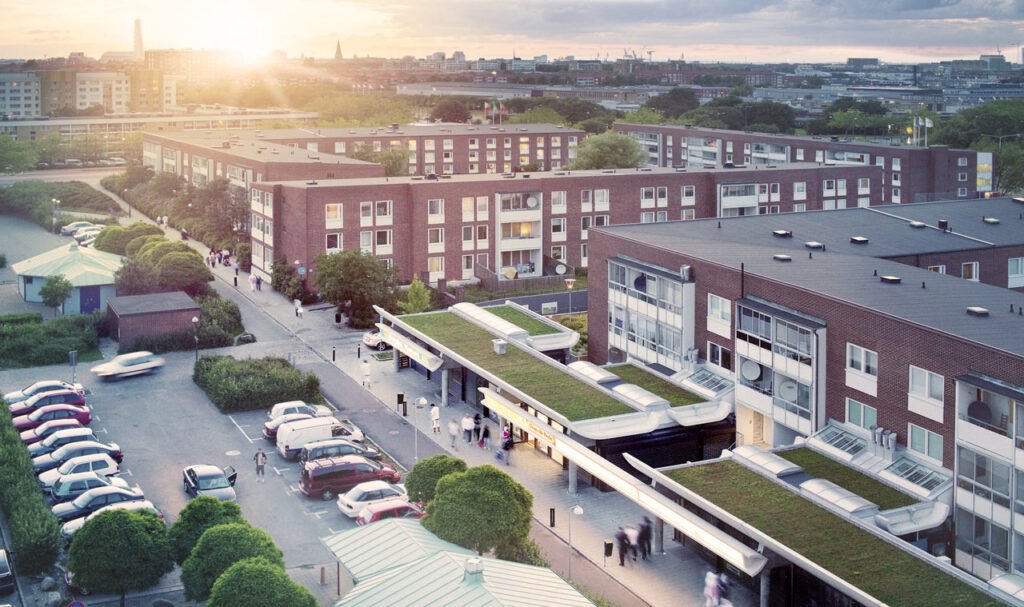
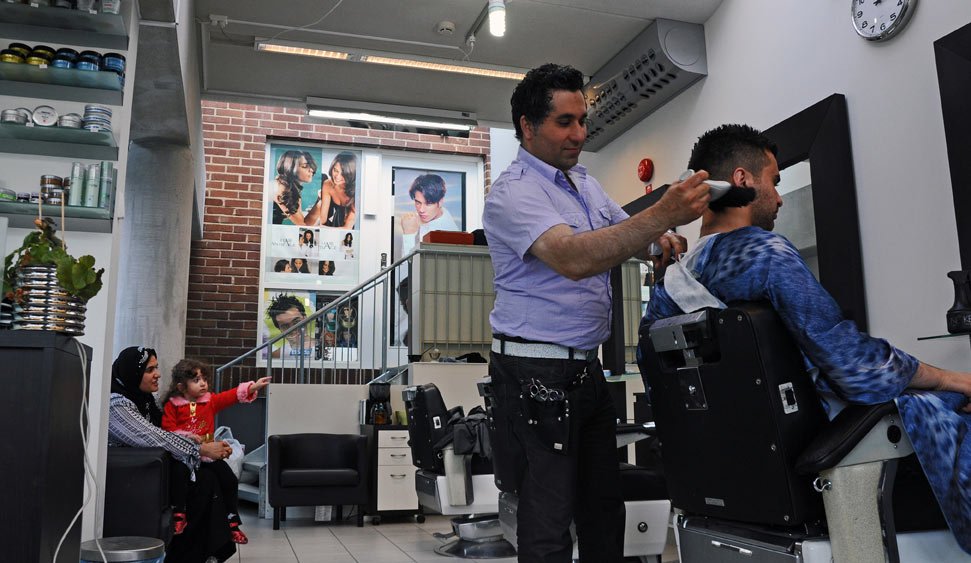
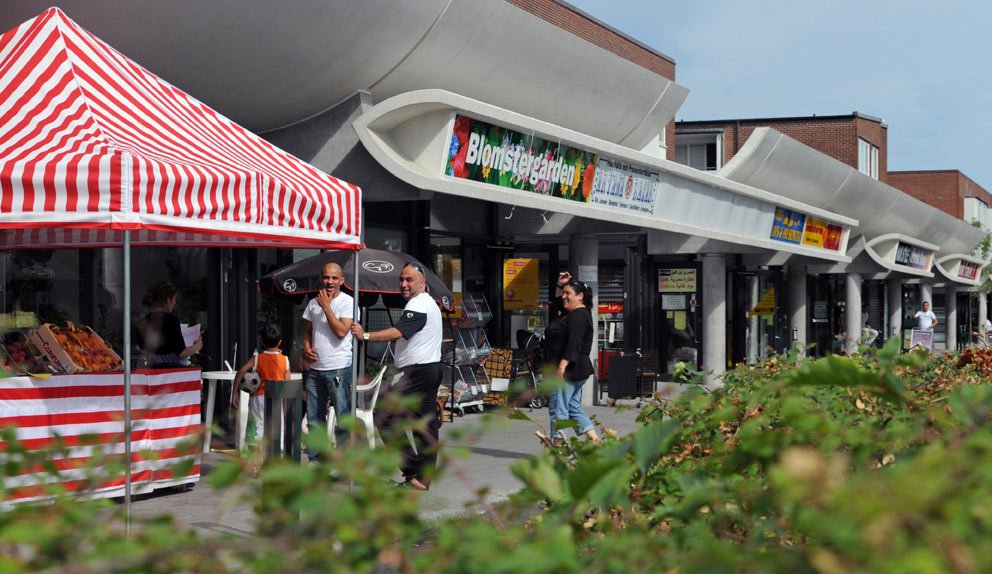
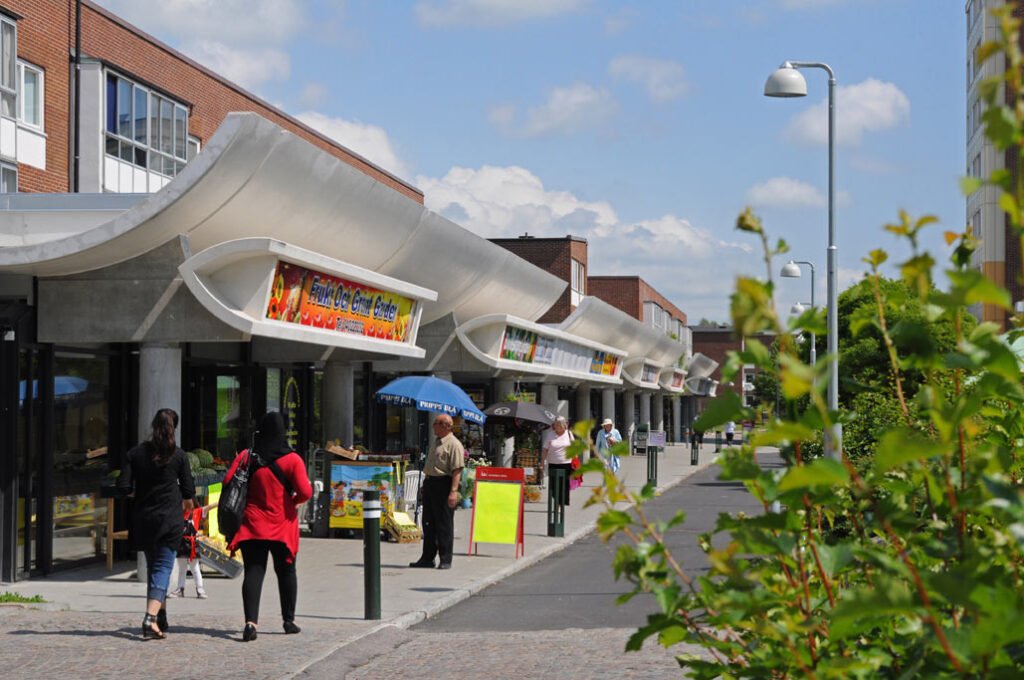
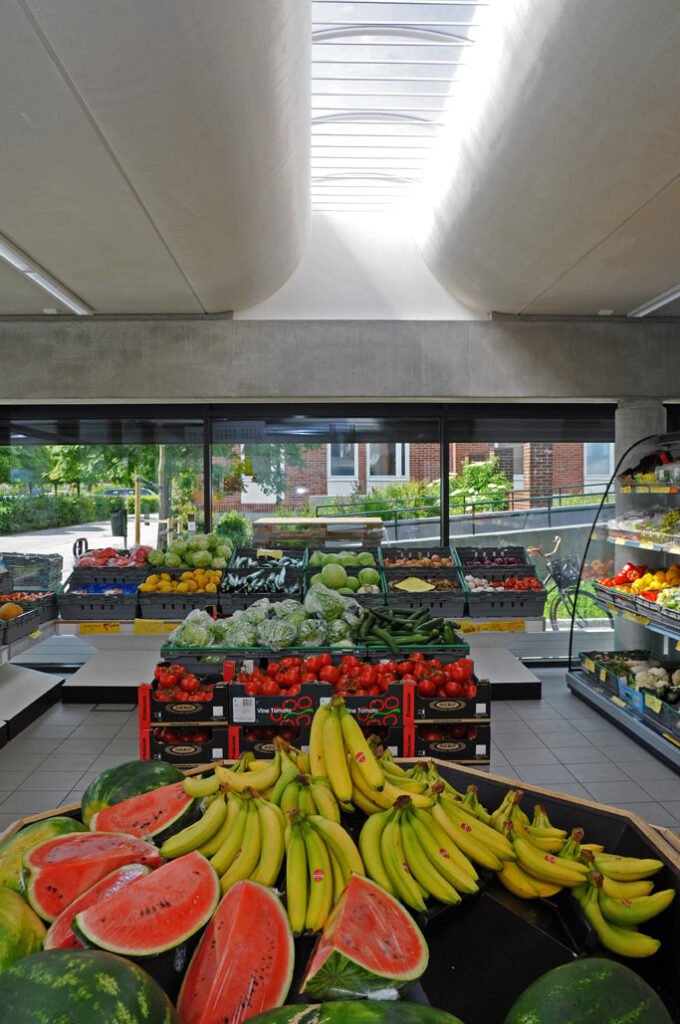
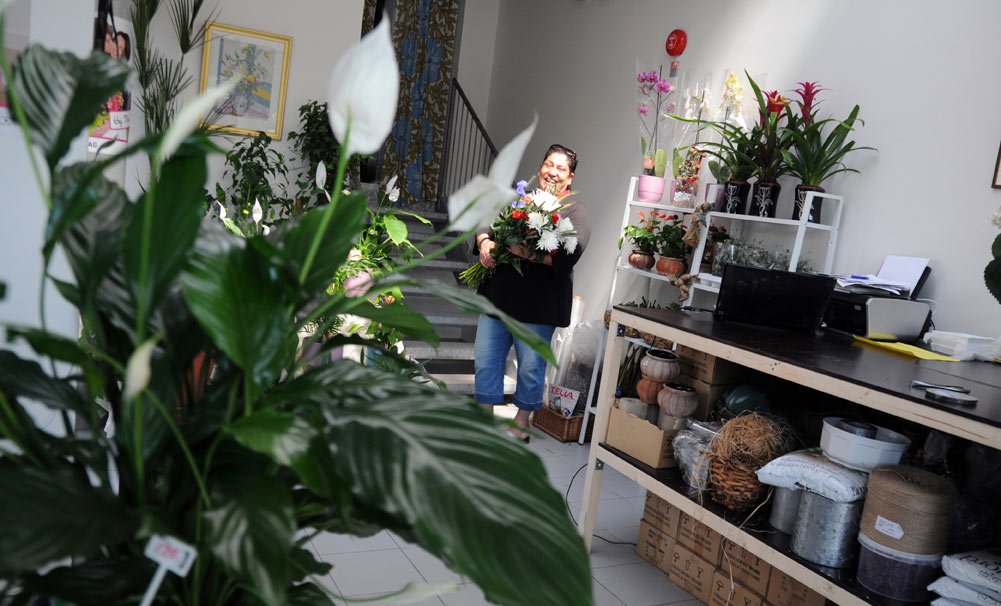
Bennez Bazaar, Malmö. Photo: Jesper Blomqvist
In Vienna, the transformation of Brunnenmarkt and the surrounding 16th District followed a more incremental approach. Rather than introducing entirely new commercial structures, the city invested in public space, housing renewal, and participatory initiatives, while preserving and strengthening one of Europe’s most established multicultural street markets.
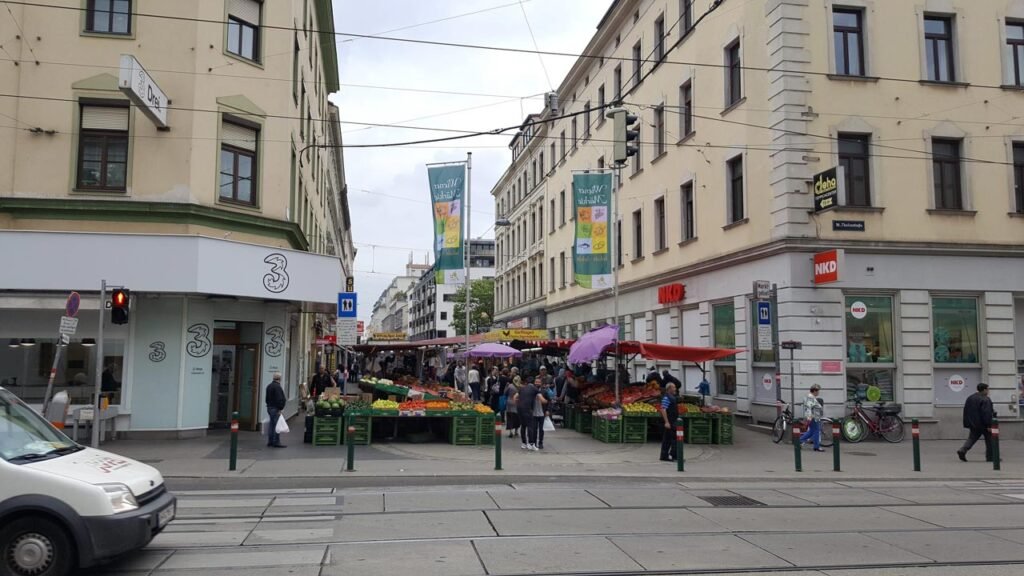
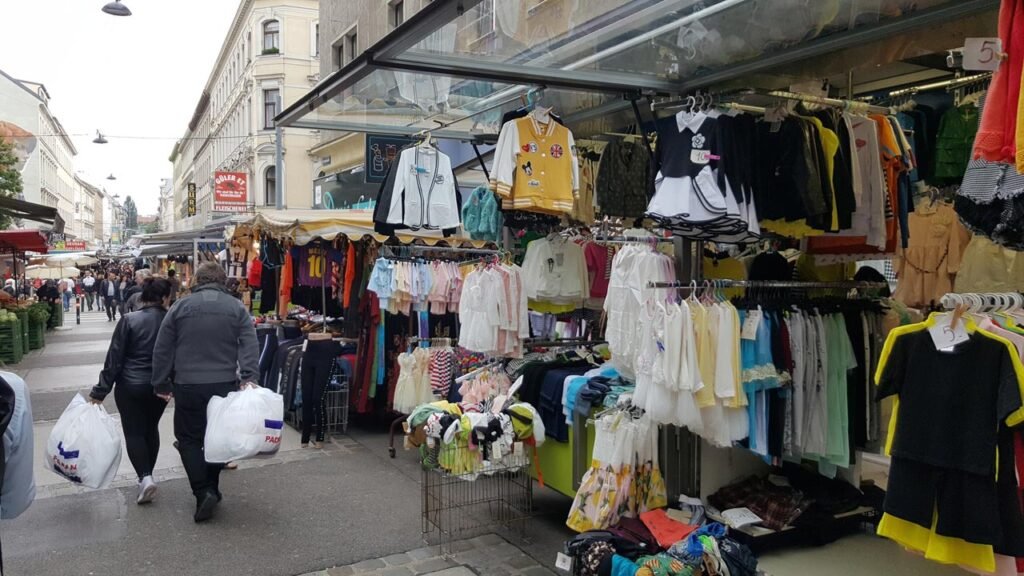
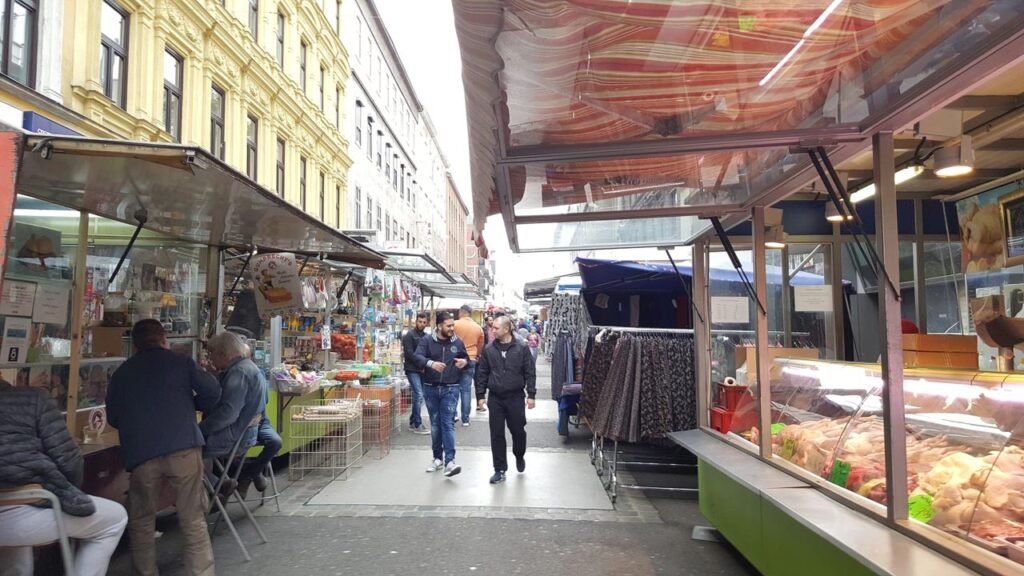
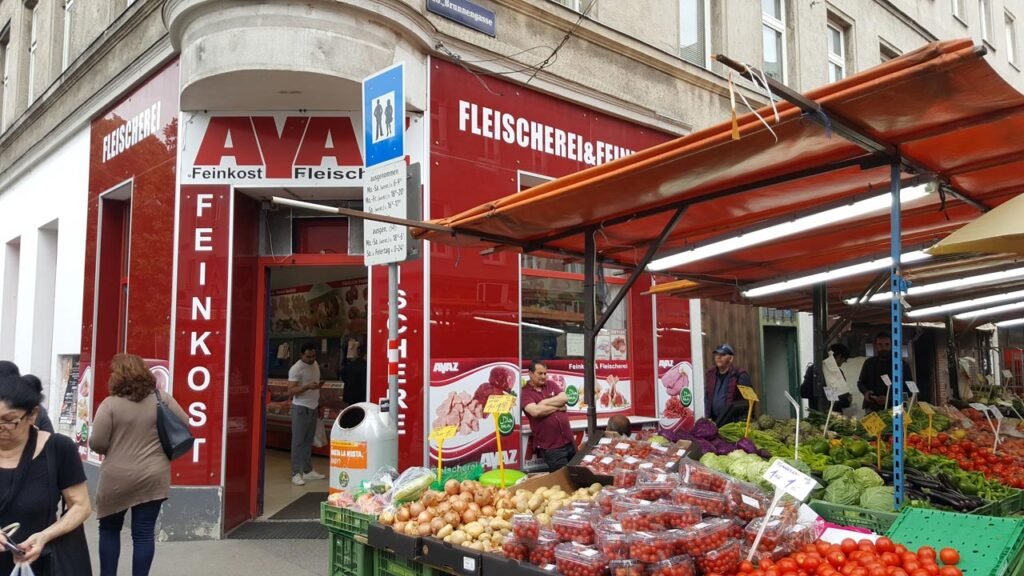
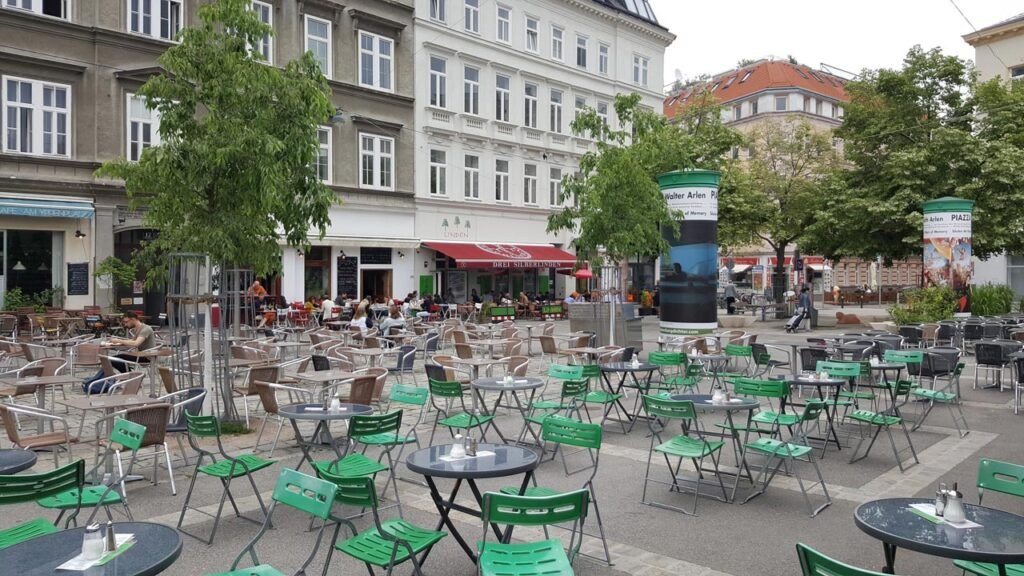
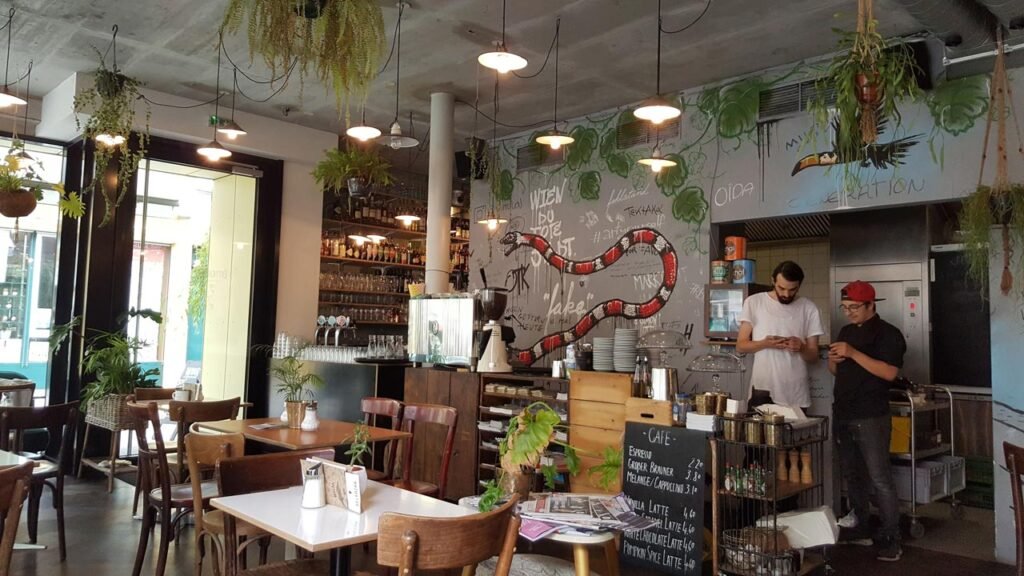
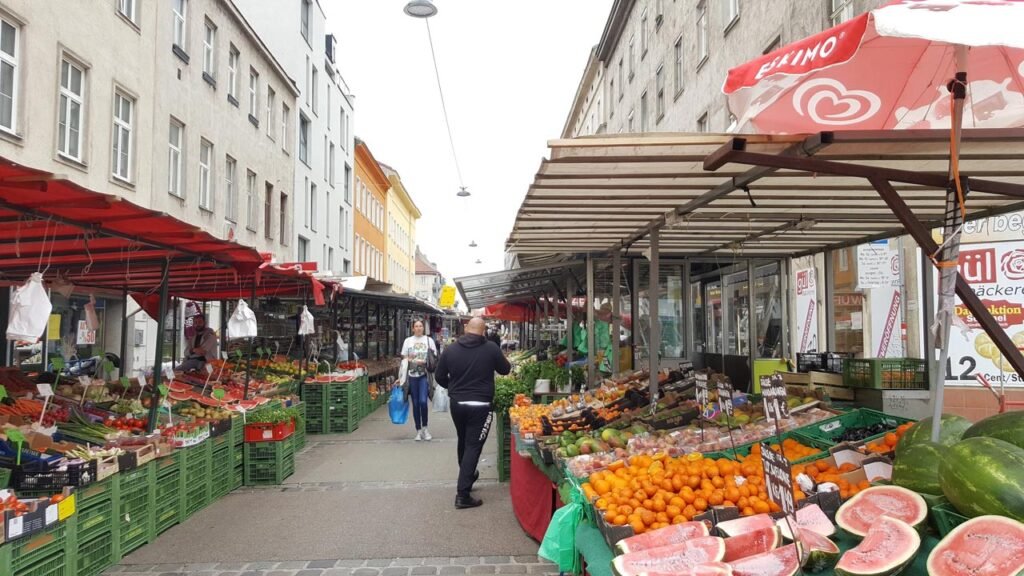
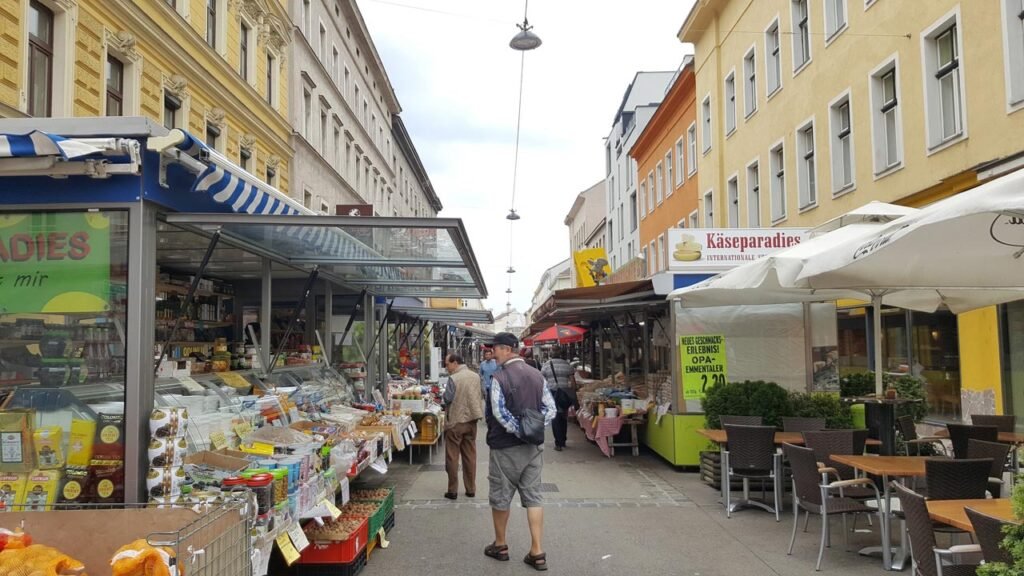
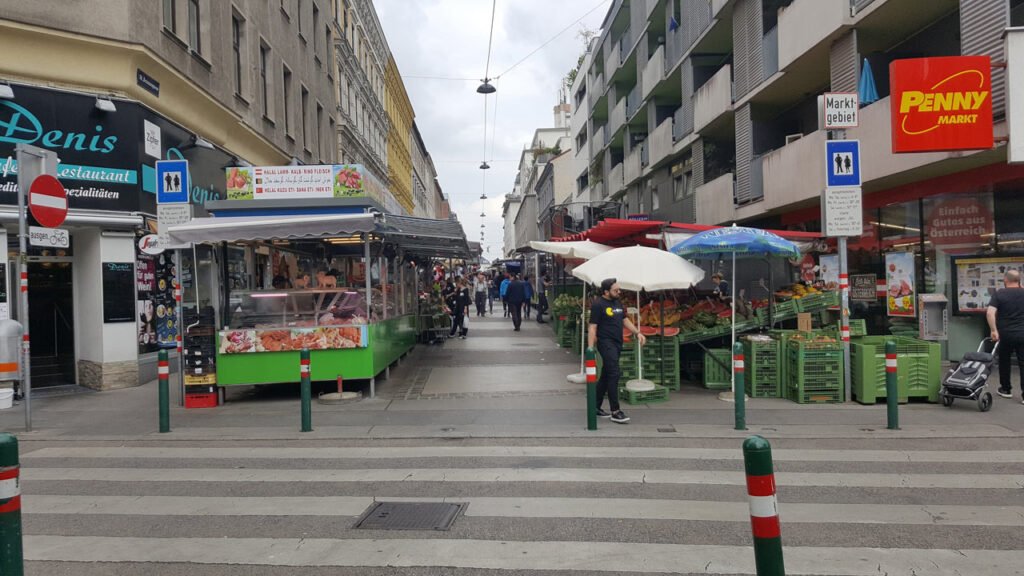
Brunnenmarkt, Vienna. Photo: Hossam Hewidy
Despite their differences, both examples recognise immigrant-led commerce as an urban asset rather than a planning problem. They demonstrate that multicultural urban life can be supported either through targeted development or through the careful reinforcement of existing social infrastructures.
What Puhos asks of Helsinki
Ultimately, Puhos invites a broader reflection on how cities define progress. It is a space shaped by migration, entrepreneurship, and everyday urban practices. It is also a space subject to redevelopment pressures that often privilege standardisation over diversity. The question, therefore, is not whether change should happen, but how it can occur without erasing the social infrastructures that already sustain urban life. Puhos is not simply a strip mall awaiting transformation. It is a functioning urban ecosystem that has already transformed itself many times over, quietly, incrementally, and through everyday practice. The challenge for urban planning is whether it can recognise this form of value in time, before it disappears.
Hossam Hewidy is an architect, researcher, and senior lecturer at Aalto University in Helsinki. His work focuses on diverse urban environments and the many meanings associated with them.
You can find this article in Finnish here.